
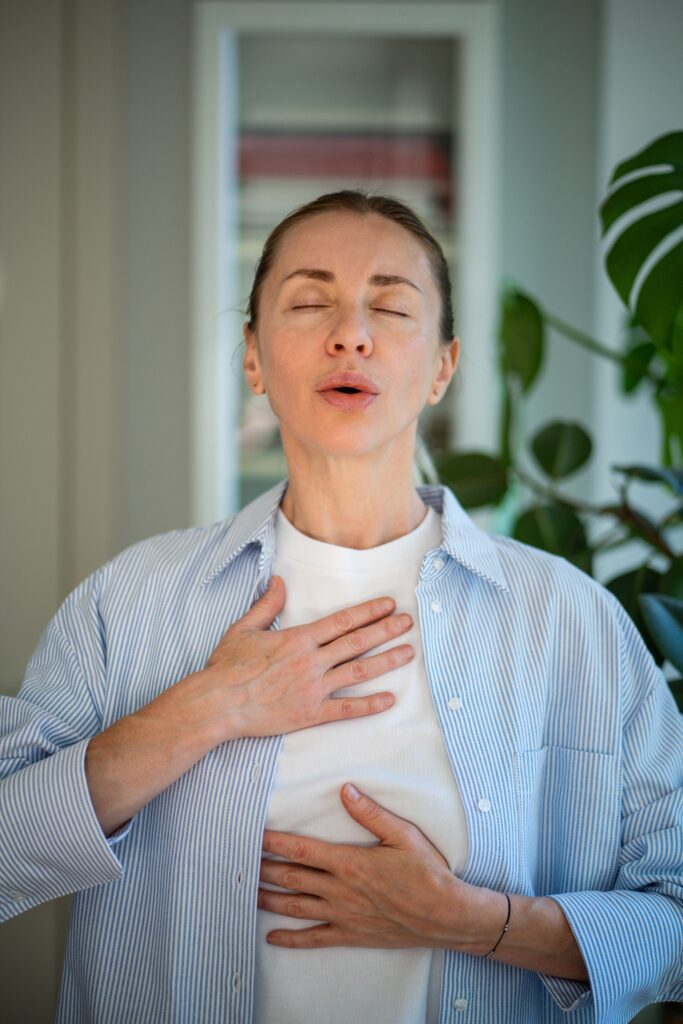
Bloating Isn’t Always a Gut Problem
If you feel bloated, especially later in the day, after meals, or seemingly out of nowhere, it’s easy to assume it’s digestive. But many cases of persistent bloating are not coming from the gut at all. We see this pattern commonly in patients with a history of abdominal surgery, IBS, and postpartum changes. It can also show up in those using GLP-1 medications. The underlying issue is how the body is managing pressure and breathing, not just what’s happening in the gut.
At Femina Atlanta, we regularly see patients across Atlanta dealing with bloating that isn’t explained by digestion alone. Instead, it’s often tied to how the diaphragm, abdominal wall, and pelvic floor are (or aren’t) working together.
When this system loses coordination, pressure gets pushed outward leading to visible abdominal distension. This is where breathing matters more than people think.
What Is Diaphragmatic (360) Breathing?
Diaphragmatic breathing isn’t just “belly breathing.”
Many patients have been told to keep their chest quiet and push their belly out but that’s an oversimplification that often creates more problems than it solves.
Just consider, your lungs aren’t in your belly. Breathing should create expansion through the rib cage, abdomen, and pelvic floor not just force the stomach outward without control.
True 360 breathing means your breath expands:
- Forward into the abdomen
- Side-to-side into the rib cage
- Back into the posterior rib cage
- Downward toward the pelvic floor
This creates a balanced pressure system within the core. The diaphragm, abdominal wall, and pelvic floor are designed to work together with each breath. When they coordinate well, your body can manage pressure efficiently during daily activities, exercise, and digestion.
What Goes Wrong
Many people don’t actually breathe this way.
Instead, we commonly see:
- Shallow chest breathing
- Rib cage flare (including xiphoid elevation)
- Limited posterior rib expansion
- Poor abdominal wall control
- Lack of pelvic floor coordination
When this happens, the system loses its ability to regulate pressure. Rather than distributing pressure throughout the core, it gets pushed outward often into the abdomen.
How This Contributes to Bloating
This is where bloating becomes more mechanical than digestive. In some cases, especially with conditions like Abdominophrenic Dyssynergia (APD), the diaphragm and abdominal wall don’t coordinate properly.
Instead of the abdomen maintaining tone and support:
- The diaphragm may descend
- The abdominal wall relaxes outward
- The belly visibly distends
This can happen even without significant gas or digestive changes.
Which is why:
- You can wake up flat and look distended by evening
- Bloating doesn’t match what or how much you ate
- Traditional gut focused approaches don’t fully resolve it
Why This Matters for Pelvic Floor Health
The pelvic floor is part of this same pressure system.
When breathing mechanics are off:
- Pressure is not well managed downward
- The pelvic floor may become overactive or underactive
- Symptoms like pelvic pressure, heaviness, or leaking can develop
This is one reason bloating, pelvic floor dysfunction, and core coordination issues often show up together.
How to Start Improving Your Breathing
This is not about forcing a big inhale into your stomach. It’s about restoring coordination.
1. 90/90 Breathing with Reach
- Lie on your back with hips and knees bent
- Feet supported (wall or surface)
- Gently reach your arms toward the ceiling as you exhale
- Feel your ribs come down and soften
- Then inhale through your nose, expanding ribs cage, focusing on lateral and posterior expansion
- Maintain a light reach without letting your ribs flare back up
2. Focus on Rib Cage Expansion
Think:
- Lateral: Side ribs widening
- Posterior: Back ribs expanding into the bed / floor
Most people are missing this piece.
3. Add Light Abdominal Control
Your abdomen should move with your breath—but not lose all support.
As you inhale, let it expand gently.
Not sucked in, and not pushed out too hard, just controlled, supported expansion.
If your stomach is pushing way out with each breath, you’re likely losing pressure control rather than improving it.
4. Child’s Pose with Abdominal Feedback
- Start in a comfortable child’s pose (kneeling, hips back toward heels)
- Place a soft ball or folded towel under your abdomen
- Gently rest into it, relaxing your head on folded arms
- Inhale through your nose, focusing on expanding into your back and sides. Do not push your abdomen into the ball as you inhale
- Hold the inhale gently for 5–10 seconds
- Then exhale slowly and fully
- Pause for 2–3 seconds before the next breath
- Repeat
The inhale should expand your rib cage and back, not drive your abdomen into the ball.
When to See a Pelvic Health Physical Therapist in Atlanta
If bloating is persistent, uncomfortable, or paired with:
- Pelvic pain
- Pelvic pressure
- Postpartum changes
- Ongoing digestive symptoms
…it’s worth getting evaluated.
At Femina Atlanta, pelvic health physical therapy in Atlanta focuses on how your entire pressure system is functioning, not just isolated symptoms.
We work with patients throughout Atlanta, including Buckhead, Brookhaven, Virginia-Highlands, and surrounding areas, who are dealing with bloating, pelvic pressure, and core dysfunction.
Treatment may include:
- Breathing retraining
- Core and pelvic floor coordination
- Manual therapy to address restrictions
- Visceral manipulation
- Nervous system regulation
The Takeaway
Bloating is not always about what you eat. Sometimes it’s about how your body manages pressure. And breathing is a central part of that system.
If you’re in the Atlanta area and dealing with ongoing bloating, pelvic pressure, or core dysfunction, a pelvic health physical therapy evaluation can help identify what’s actually driving your symptoms.
FAQ
Can breathing really cause bloating?
Yes. A lot of bloating isn’t just digestive. If the diaphragm, abdominal wall, and pelvic floor aren’t working together, pressure gets pushed outward and the abdomen distends. It can look and feel like bloating, even when digestion isn’t the main issue.
What is 360 breathing and how is it different from belly breathing?
360 breathing is not just pushing your belly out. It’s expansion through the rib cage, sides, back, and pelvic floor. If you’re only breathing into your stomach, you’re missing a big part of how the core is supposed to manage pressure.
Why does my stomach get bigger as the day goes on?
This is something we see all the time. As the day goes on, your body gets less efficient at managing pressure. Breathing patterns, posture, and fatigue all play a role, so the abdomen starts to push outward instead of staying controlled.
Can pelvic floor dysfunction cause bloating?
Yes. The pelvic floor is part of your pressure system. If it’s not coordinating well with your breath and abdominal wall, pressure has nowhere to go and often shows up as bloating or abdominal distension.
When should I see a pelvic health physical therapist in Atlanta?
If bloating keeps coming back, doesn’t match what you eat, or is paired with pelvic pressure, pain, or postpartum changes, it’s worth getting evaluated. A pelvic health physical therapist in Atlanta can look at how your whole system is working together and figure out what’s actually driving it.
Related Reading
- GLP-1 Medications and Bloating: Why You Feel Distended
- Understanding Abdominophrenic Dyssynergia (APD)
- Treating Bloating and Abdominal Distension: a Multi-Disciplinary Team
- Insider | What is endo belly? How to manage the severe bloating endometriosis
References
- Drossman DA, Hasler WL. Rome IV—Functional GI Disorders. Gastroenterology. 2016.
- Barba E, et al. Abdominophrenic Dyssynergia: A Narrative Review. Neurogastroenterology & Motility. 2019.
- Kolar P, et al. Postural Function of the Diaphragm in Persons With and Without Chronic Low Back Pain. J Orthop Sports Phys Ther. 2012.
- Hodges PW, Gandevia SC. Activation of the Human Diaphragm During Postural Adjustments. J Physiol.
- Smith MD, Russell A, Hodges PW. Disorders of Breathing and Continence Have a Strong Relationship. Int Urogynecol J.